
 EN
 ar
 bg
 hr
 cs
 da
 nl
 fi
 fr
 de
 el
 hi
 it
 ko
 no
 pl
 pt
 ro
 ru
 es
 sv
 tl
 iw
 id
 lv
 lt
 sr
 sk
 sl
 uk
 vi
 et
 hu
 th
 tr
 fa
 ms
 hy
 ka
 ur
 bn
 mn
 ta
 kk
 uz
 ku

Intelligent Weir Flow Meter
The automatic data path for Kingmach Intelligent Weir Flow Meter should be planned before the site is closed or flooded. Flow records need clear time stamps, stable communication, correct units, and a point name that matches the physical channel. If a project has more than one weir point, the names should identify the structure, flow direction, and purpose. The data platform should allow operators to see normal patterns, storm response, maintenance effects, and abnormal events without guessing which point they are reviewing. A clean data path also helps when flow is compared with rainfall, water level, seepage, or gate operation. Good acquisition planning makes the measurement easier to trust and easier to use in daily operation. The strongest flow reports are written around decisions. They show whether to keep observing, clean the channel, inspect upstream conditions, check downstream backwater, or compare the point with another water-level or rainfall record. A weir point also needs safe routine access. If staff cannot reach the crest, enclosure, or sensing area during wet weather, the project may collect data but struggle to maintain confidence in it when the record is most important. Designers, operators, maintenance staff, and owners may read the same curve, so the record needs clear site conditions, inspection notes, and action history in plain engineering language.
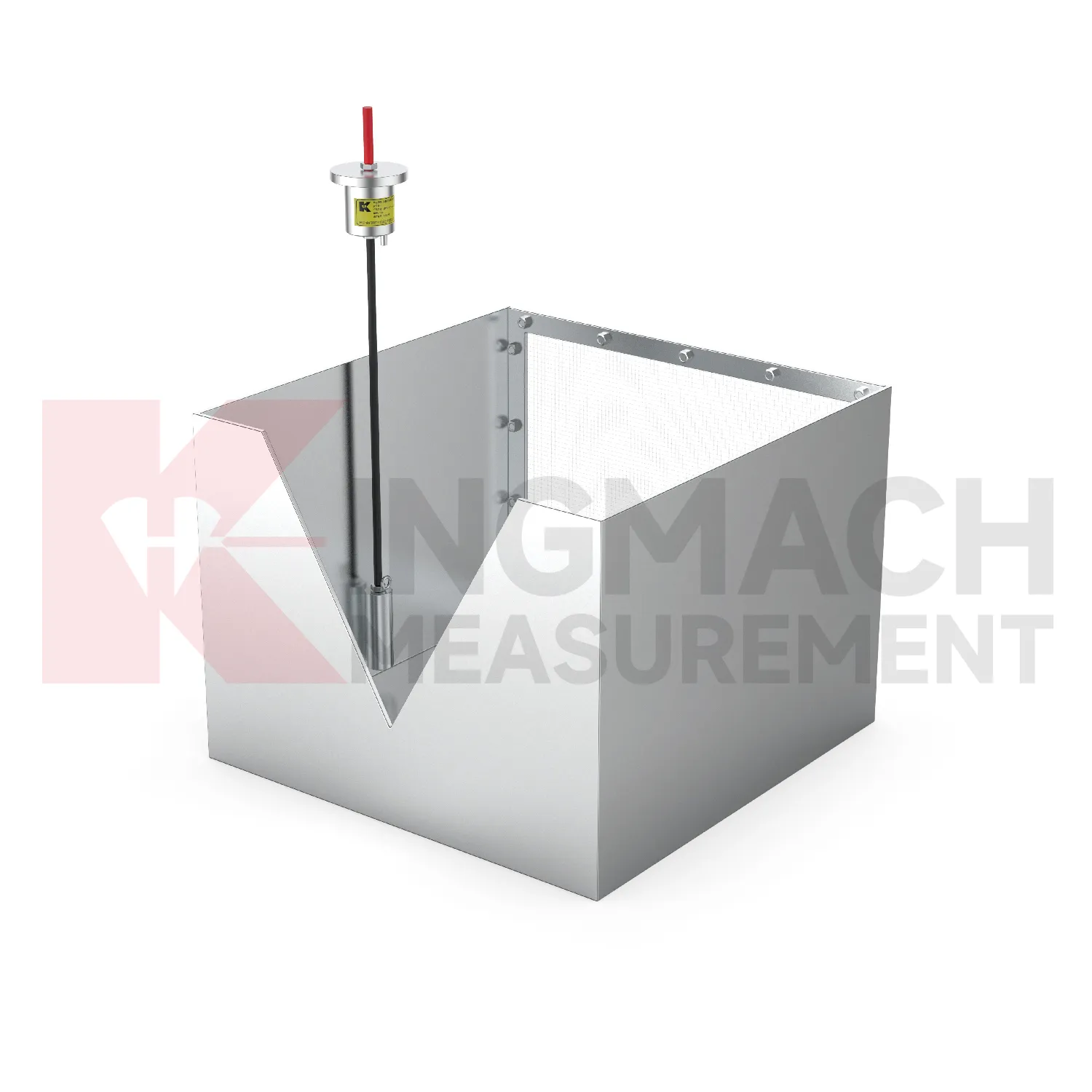
Application of Intelligent Weir Flow Meter
Water conservancy projects use Kingmach Intelligent Weir Flow Meter to observe controlled flow through small structures, channels, test sections, and auxiliary discharge points. The measurement is useful when operators need a continuous record rather than occasional visual checks. A weir point can show how flow changes after rainfall, gate operation, upstream storage variation, or maintenance work. The application should be planned around the water path: approach condition, weir crest, water head reference, downstream influence, and cleaning access. Data should be reviewed with reservoir level, rainfall, gate records, seepage notes, and field inspection. If the flow curve changes suddenly, the team should check both the water condition and the measuring section. This approach helps water conservancy teams use flow monitoring as part of operation, maintenance, and safety review rather than a separate instrument reading. In these projects, the flow point may support canal regulation, spillway observation, auxiliary drainage, or small test structures. The record is strongest when it is linked to the purpose of the channel. Operators can compare the trend with gate timing, upstream water level, and inspection notes, then decide whether the change reflects normal operation, a blockage, or a field condition that needs direct confirmation. This keeps operational review connected to hydraulic reality.
The future of Intelligent Weir Flow Meter
Remote monitoring will become more important for Kingmach Intelligent Weir Flow Meter because many flow points are placed in channels, tunnels, drainage outlets, rural irrigation areas, or hydraulic structures that are not checked every day. A remote record can show night flow, storm peaks, delayed discharge, and gradual blockage patterns. Future systems should also show station health, last maintenance, data gaps, and whether the point needs field cleaning. This helps teams know when the record is trustworthy and when the site requires a visit. Remote flow monitoring works best when it reports both water behavior and the condition of the measuring point. Future platforms should make field visits more focused. Instead of sending staff only because a curve looks unusual, the system can show whether the change follows rain, a planned pump event, or a known cleaning activity. That context helps teams decide whether to inspect immediately, wait for confirmation, or review a nearby station first. Remote monitoring becomes more practical when it reduces uncertainty, not when it simply produces more alarms.
Care & Maintenance of Intelligent Weir Flow Meter
Care and maintenance of Kingmach Intelligent Weir Flow Meter should begin with the weir section itself. The crest, approach channel, water head location, and downstream condition must remain consistent with the original measuring purpose. Debris, sediment, algae, vegetation, damaged edges, or changed channel shape can affect the record even when the electronics are healthy. Maintenance staff should inspect the hydraulic control, not only the enclosure. Photographs after cleaning are useful because they show whether the measuring section remained clear. A flow curve is only as trustworthy as the channel condition behind it. A good routine separates hydraulic housekeeping from instrument checks. Crews can walk the channel after storms, remove trapped material before it hardens, confirm that the staff reference remains readable, and note whether nearby construction has changed the approach path. The written record should describe observed conditions in plain language, so a later reviewer can understand why a reading changed before adjusting any calculation or blaming the device.
Kingmach Intelligent Weir Flow Meter
Kingmach Intelligent Weir Flow Meter is useful for small changes because flow problems often begin quietly. A gradual reduction may suggest sediment, vegetation, debris, gate change, or downstream backwater. A sudden increase may follow rainfall, pump activity, discharge operation, or a fault in the upstream system. If the flow record is stored with inspection notes, the team can separate water behavior from measurement trouble. That makes the system useful for maintenance teams as well as designers. The record should help answer what changed, when it changed, and whether the change belongs to water movement or to the measuring point. In many field projects, that distinction prevents wasted trips and confused reports. Operators can review the trend before visiting the channel, then use the visit to confirm hydraulic condition, access safety, and any visible change around the crest or outlet. The result is a clearer operating picture, not just another number in a database.
FAQ
Q: What site conditions affect flow readings?
A: Sediment, debris, turbulence, backwater, algae, damaged crest edges, poor approach flow, and changed channel geometry can all affect the record.
Q: Why is cleaning important?
A: Cleaning keeps the control section clear so the water head record continues to represent the intended flow relationship.
Q: How should abnormal flow changes be reviewed?
A: Check rainfall, upstream operation, downstream condition, cleaning history, enclosure status, and field inspection notes before drawing conclusions.
Q: Can flow monitoring be remote?
A: Yes. Remote monitoring is useful when continuous records are needed or when the site is difficult to access during storms or operation.
Q: What should be recorded at installation?
A: Record channel location, flow direction, weir condition, water head reference, cable route, enclosure position, cleaning access, and first stable reading. The strongest flow reports are written around decisions. They show whether to keep observing, clean the channel, inspect upstream conditions, check downstream backwater, or compare the point with another water-level or rainfall record.
Reviews
Daniel Brown
Excellent environmental monitoring sensors. The data is consistent, and the system integrates smoothly with our existing setup.
Ryan Lewis
Fast delivery and excellent product quality. The accelerometers and tiltmeters are highly reliable. Strongly recommend this company.
Latest Inquiries
To protect the privacy of our buyers, only public service email domains like Gmail, Yahoo, and MSN will be displayed. Additionally, only a limited portion of the inquiry content will be shown.
Olivia***@gmail.comUnited States
Hello, we are currently sourcing high-precision strain gauges and load cells for a bridge monitoring...
Charlotte***@gmail.comUnited Arab Emirates
Hi, we require instrumentation cables suitable for harsh environments. Could you advise on specifica...
Related product categories
- Intelligent Weir Flow Meter
- Smart Weir Flow Meter
- weir flow meter
- weir type flow meter
- weir flow meter Price
- weir flow meter Manufacturer
- weir flow meter Supplier
- weir flow meter Solution
- weir flow meter System Integration
- weir flow meter Localization
- weir flow meter Domestic Manufacturing
- weir flow meter China