
 EN
EN
 ar
ar bg
bg hr
hr cs
cs da
da nl
nl fi
fi fr
fr de
de el
el hi
hi it
it ko
ko no
no pl
pl pt
pt ro
ro ru
ru es
es sv
sv tl
tl iw
iw id
id lv
lv lt
lt sr
sr sk
sk sl
sl uk
uk vi
vi et
et hu
hu th
th tr
tr fa
fa ms
ms hy
hy ka
ka ur
ur bn
bn mn
mn ta
ta kk
kk uz
uz ku
ku
weir flow meter China
Kingmach weir flow meter China can support remote and unattended monitoring when the site is difficult to access or when flow needs to be observed continuously. Manual readings may be enough for occasional checks, but many drainage, irrigation, tunnel, and hydraulic sites need a record that covers night hours, storms, operating changes, and gradual shifts. Remote data is most useful when the point has a clean channel, a stable reference, protected cables, and clear channel names in the acquisition system. The data should be stored with units, time stamps, and field notes so reviewers understand both the water behavior and the measurement condition. If a remote flow point shows an abnormal change, the team should be able to check recent weather, maintenance work, upstream operation, and channel condition before sending someone to the site. This makes automation a practical operating aid rather than just a convenient display. A remote point also needs disciplined context. Alarm rules should match the expected channel behavior, not a generic number. Trend review should consider rainfall, pump activity, planned cleaning, nearby construction, and downstream water level. When these notes are tied to the curve, the office team can decide whether the event requires urgent inspection, routine follow-up, or simple observation. This reduces unnecessary travel while keeping the field record explainable for later reporting.
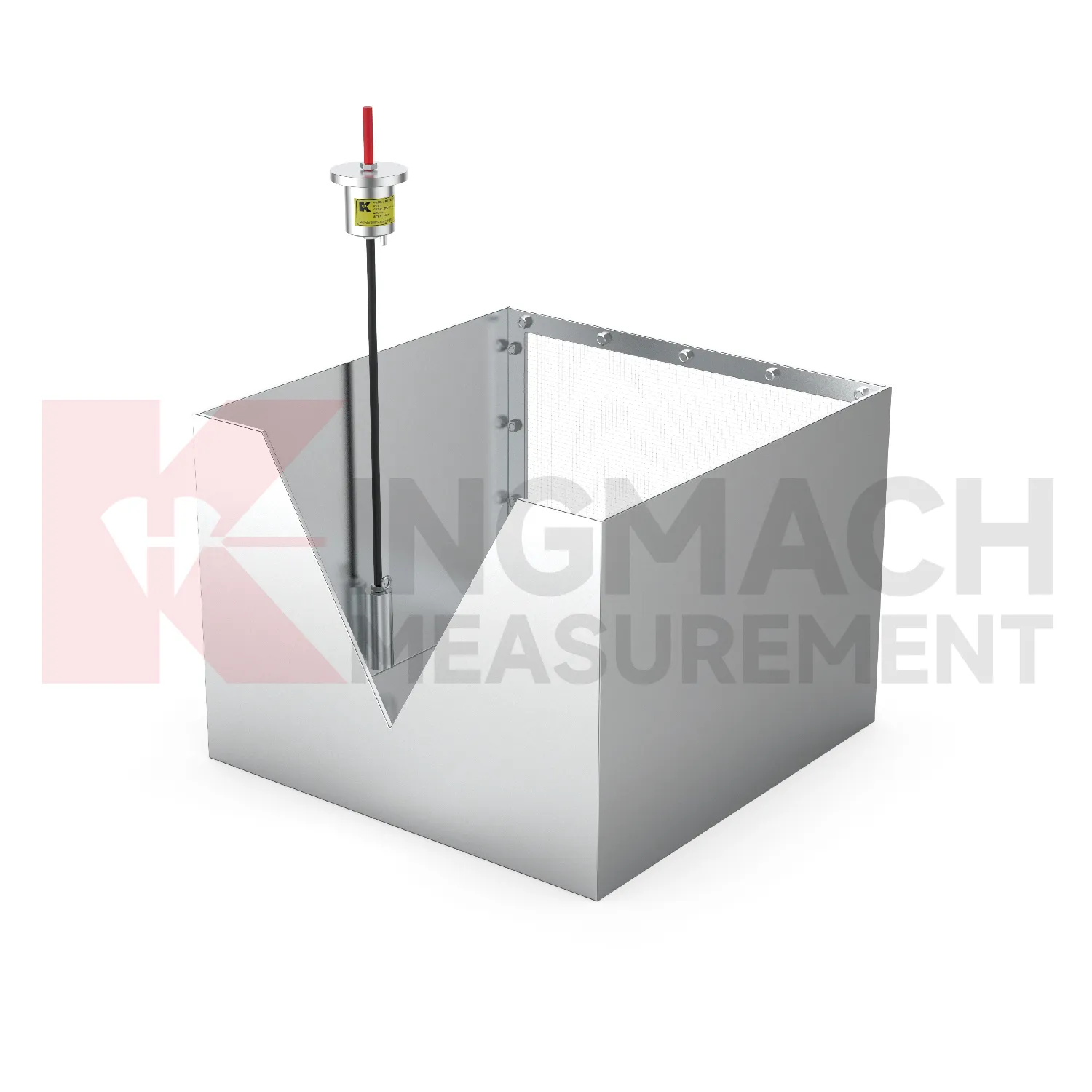
Application of weir flow meter China
Tunnel and underground projects use Kingmach weir flow meter China when discharge, seepage collection, or drainage flow needs to be observed over time. A tunnel drainage point may behave differently after rainfall, excavation, lining work, groundwater change, or maintenance cleaning. Flow records should be reviewed with seepage notes, water level observations, settlement, convergence, crack records, and inspection photographs. The measuring point must remain accessible because underground channels can collect sediment, scale, or debris. Point names should include section, side, drainage path, and purpose so future maintenance teams know what the record represents. A reliable flow curve helps distinguish routine drainage from a change that may require closer investigation. In underground work, the context around the number matters. A rising flow trend near a known seepage zone may require a different response from a brief rise after planned washing or pumping. Operators should keep notes about access restrictions, lighting, ventilation, cleaning time, and visible deposits near the measuring section. Those details help engineers review the record without guessing what happened on site. When the tunnel enters long-term service, the same monitoring point can continue to support drainage maintenance, seasonal review, and early discussion of unusual water movement. It also helps compare different tunnel sections without relying only on memory or scattered inspection notes.
The future of weir flow meter China
Digital handover will be a stronger future requirement for Kingmach weir flow meter China. A flow point may remain in operation for years, long after the installation team has left. Future handover records should include the purpose of the point, channel photographs, weir geometry notes, water head reference, cable route, data channel, cleaning access, and first stable record. This context helps later reviewers understand whether the point measures drainage, irrigation, seepage, process water, or another water path. A good handover file keeps the flow curve meaningful through staff changes, repairs, and changes in site operation. Future systems should make that file easy to update after every important field action. If a crew cleans sediment, replaces a cable, adjusts a reference, or changes a platform channel, the note should stay with the station history. This turns handover from a one-time folder into a living record that protects long-term interpretation. It also helps new teams avoid repeated investigation.
Care & Maintenance of weir flow meter China
Routine inspection of Kingmach weir flow meter China should connect field condition with data quality. The inspector should look at the crest, approach channel, downstream condition, sensing area, enclosure, cable route, labels, and recent data trend. If the point is difficult to access safely, that risk should be part of the maintenance plan. The inspection record should be short but specific: what was seen, what was cleaned, what changed, and whether the next reading looked normal. This keeps the flow monitoring point useful through storms, sediment events, construction changes, and long-term operation. Handover records should make the location understandable for the next crew. Site photos, access notes, nearby landmarks, cleaning tools, and known seasonal issues can prevent repeated diagnosis work. When operators change, a clear maintenance note helps preserve continuity, especially at remote channels where small changes in the control section may not be obvious from the office trend alone. Simple maps help too.
Kingmach weir flow meter China
For water conservancy and drainage work, Kingmach weir flow meter China helps turn routine channel observation into a record that can be compared over time. Manual checks may capture a single moment, but automatic flow monitoring can show daily rhythm, storm response, operating changes, and abnormal behavior. The data is useful when it answers practical questions: Is the channel passing expected flow? Did a maintenance action restore capacity? Did a rainfall event create delayed discharge? Did sediment or debris affect the measurement? A strong flow monitoring plan connects the weir point with field inspection and maintenance notes so the number remains explainable. The value is not only in collecting a level reading. It is in creating a stable reference for how a channel behaves under normal use, heavy rain, seasonal change, and maintenance activity. When the same location is observed consistently, operators can see whether the site is changing gradually or reacting to a specific event.
FAQ
Q: How does Kingmach weir flow meter China help drainage projects?
A: It shows how discharge changes during routine operation, storms, dewatering, blockage, cleaning, or downstream backwater.
Q: How does it help irrigation projects?
A: It helps compare delivery timing, flow distribution, channel condition, rainfall effect, and water-use management across operating periods.
Q: How does it help tunnels?
A: It can track drainage or seepage-related flow and compare changes with rainfall, groundwater, maintenance cleaning, or underground construction activity.
Q: How does it help dam or slope drainage?
A: It provides a flow record that can be reviewed with seepage, rainfall, pore pressure, settlement, displacement, and inspection notes.
Q: How does it fit into a platform?
A: It works as the flow layer beside rainfall, water level, seepage, environmental, and structural monitoring records. A weir point also needs safe routine access. If staff cannot reach the crest, enclosure, or sensing area during wet weather, the project may collect data but struggle to maintain confidence in it when the record is most important.
Reviews
Joshua Clark
We ordered a full monitoring solution including sensors and data loggers. Everything works seamlessly together. Great supplier!
Robert Taylor
The weir flow meter is well-built and delivers accurate measurements. Great value for water management applications.
Latest Inquiries
To protect the privacy of our buyers, only public service email domains like Gmail, Yahoo, and MSN will be displayed. Additionally, only a limited portion of the inquiry content will be shown.
Mia***@gmail.comNetherlands
Dear team, we are interested in your readouts & data loggers compatible with multiple sensors. Do yo...
Evelyn***@gmail.comSouth Africa
Hi, we are a contractor working on tunnel construction and need settlement sensors and displacement ...