
 EN
EN
 ar
ar bg
bg hr
hr cs
cs da
da nl
nl fi
fi fr
fr de
de el
el hi
hi it
it ko
ko no
no pl
pl pt
pt ro
ro ru
ru es
es sv
sv tl
tl iw
iw id
id lv
lv lt
lt sr
sr sk
sk sl
sl uk
uk vi
vi et
et hu
hu th
th tr
tr fa
fa ms
ms hy
hy ka
ka ur
ur bn
bn mn
mn ta
ta kk
kk uz
uz ku
ku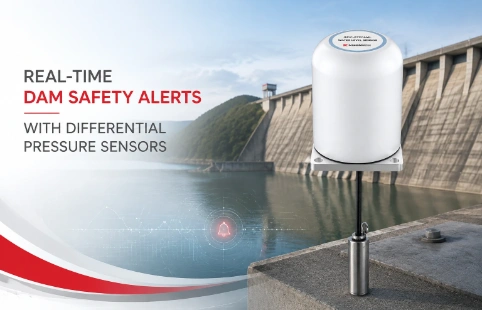
Real-Time Dam Safety Alerts with Differential Pressure Water Level Sensors
Key Takeaways An alert chain needs more than a sensor: define field in...

Kingmach GPRS DTU: Reliable Data Transfer for Remote Monitoring
When setting up monitoring equipment at remote landslide sites, power supply and communication are often more troublesome than the sensors themselves. Many engineering teams have found that the cost of fiber optic cables is high, and the use of digital radio stations is limited by terrain, so the operator's GPRS network has become the most practical choice. Kingmach's GPRS DTU is designed for this purpose - it transparently transmits on-site RS485/232 sensor data to the public IP network, allowing the monitoring center to receive real-time readings without the need for people to go to the site to take the data. The work done by the DTU itself is not complicated: it automatically dials up to connect to the Internet after powering on, maintains heartbeats, and sends cached data packets when receiving instructions from the data center. The key is stability. Kingmach focused on two things when designing: one is low power consumption, and the other is automatic recovery from exceptions. Under the conditions of outdoor solar power supply, the device can work for a long time; when encountering a network interruption, the watchdog will reset the module and come back online. This is very important for unattended sites. This set of DTU has been used in multiple slope, mine and foundation pit projects. The most direct benefit from user feedback is that no matter how remote the site is, as long as there is 2G signal coverage, the data can be transmitted back.
Technical Detail
Kingmach Measurement & Monitoring Technology Co., Ltd. provides GPRS DTU as a universal component of geotechnical monitoring solutions. It is not bound to specific sensors. As long as the interface is suitable, data from inclinometers, fracture meters, piezometers and other equipment can be packaged and sent. From the perspective of the project site, the DTU is basically a "black box" after it is installed - connect the power supply, insert the SIM card, connect the sensor, set the data center IP and port, and then there is no need to control it again. In actual use, there are two points that attract more attention: one is power consumption, and the other is network adaptation. Kingmach's DTU firmware has been specifically optimized to automatically go to sleep when idle and quickly wake up to send when there is data. In addition, the module is compatible with SIM cards of multiple operators and can maintain connections in areas with large signal fluctuations. In terms of transmission, it supports commonly used TCP and UDP protocols, and can also be configured as HTTP upload to facilitate docking with different host computer software. For heartbeat mechanisms that need to remain continuously online, the time interval can be adjusted from 10 seconds to 600 seconds to avoid wasting traffic. The hardware provides two serial ports, RS232 and RS485, and most geotechnical instruments can be connected directly. In addition to the device itself, Kingmach also provides configuration tools and technical tips to help field personnel quickly troubleshoot communication problems. Compared with building a self-built wireless bridge or renting a satellite link, the initial investment and operation and maintenance cost of GPRS DTU are much lower, and it is especially suitable for monitoring projects with many points and scattered locations.
News
Key Takeaways An alert chain needs more than a sensor: define field in...
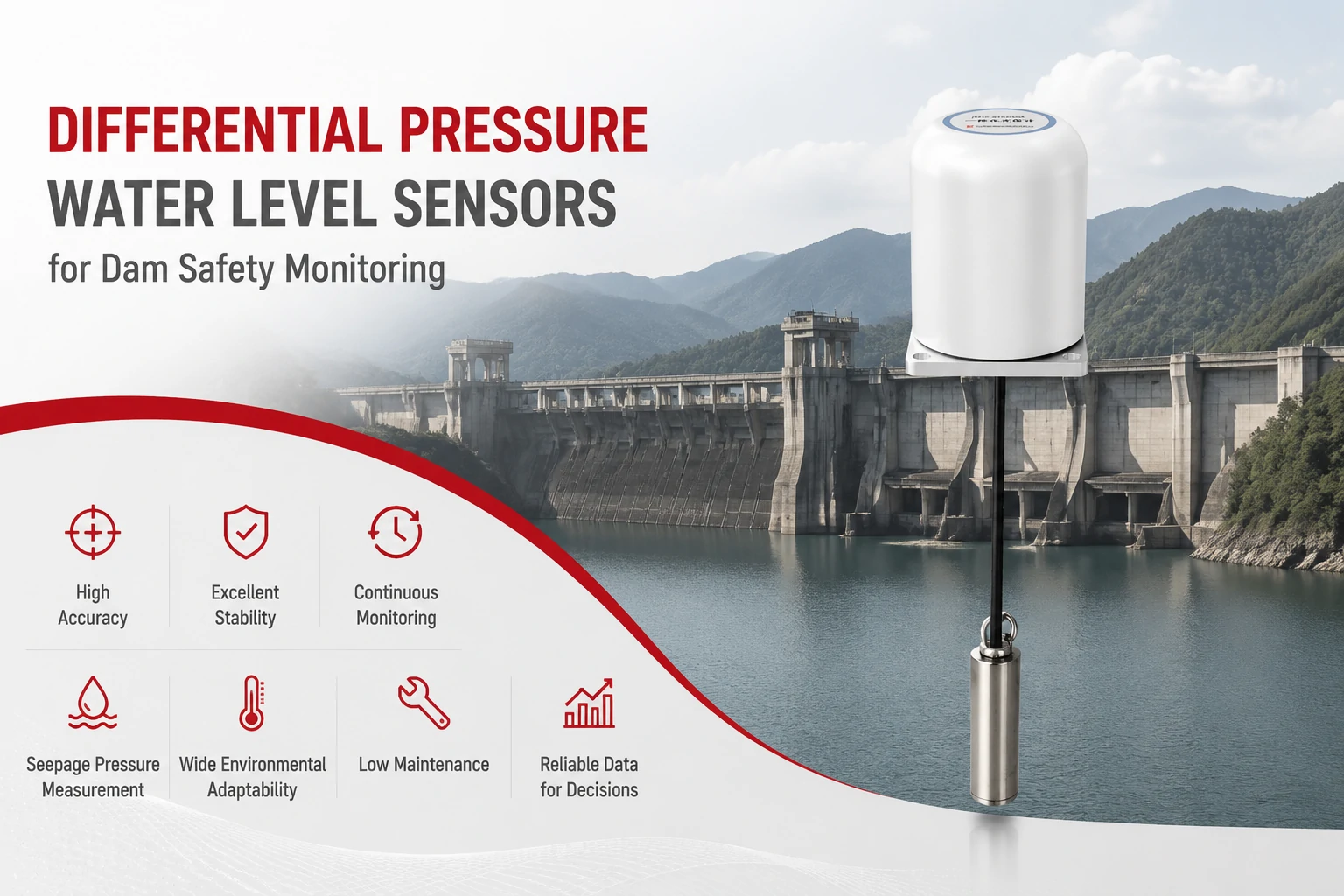
Key Takeaways The strongest fit is usually a confined, submerged, or s...
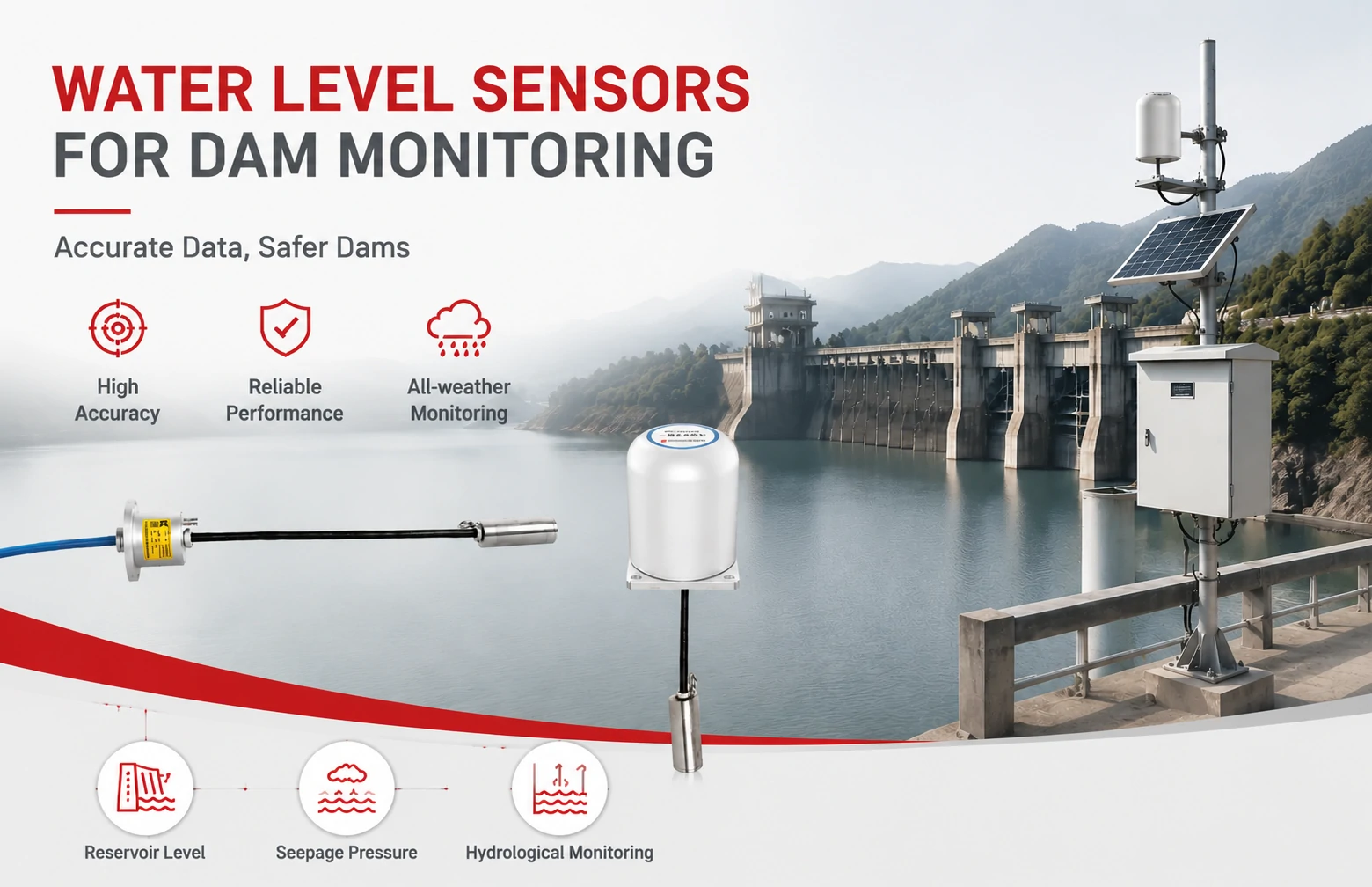
Kingmach Water Level Sensors for Dam Monitoring: A Buyer's Guide to Differential Pre...
Products
FAQ
This depends on the on-site signal coverage. GPRS is a 2G network. Although the bandwidth is low, the coverage radius of the base station is larger than 4G, and the penetration ability is stronger. In some remote mountainous areas, it is more stable. If you only transmit a small amount of sensor data and record one record every ten seconds, the bandwidth of GPRS is completely sufficient. If you will definitely upgrade to transmitting video or high-frequency data in the future, you can consider using 4G DTU directly, but many monitoring projects now still prefer GPRS because it is simple and reliable.
Kingmach's DTU has dual guarantees of hardware watchdog and software detection. After disconnection, it can usually detect and redial within 30 seconds. If the module crashes, the watchdog will forcefully restart the entire machine, and the recovery time is usually 1-2 minutes. The time can be adjusted through configuration, but it is recommended not to set it too short to avoid frequent reconnections that consume traffic and power.
A DTU usually only provides one serial port, either RS232 or RS485. If both interfaces are available on site, you can use a small module from 485 to 232, or choose a model that supports dual serial ports (need to confirm inventory). Kingmach's standard model is RS485, because the field wiring distance is long, 485 is more suitable. We can recommend the connection method based on your sensor list.
The heartbeat interval depends on your operator's policy. It is usually recommended to set it to 300 seconds (5 minutes), which can maintain continuous NAT mapping without causing too much traffic consumption. A heartbeat packet usually only has a few dozen bytes, which is only a few megabytes accumulated in a month, and can basically be ignored. However, if it is set too short, such as 30 seconds, the traffic will increase significantly. In a package with limited traffic, pay attention to controlling the interval.
Share your product type, target capacity, and application requirements. Our team can review the details and recommend a practical next step.
If you are interested in our products or want to become our partner.
Please leave your contact information, our team will contact you as soon as possible.
Mail: [email protected]
Contact Us: +8613808434127
Address: No. 188 Tongzipo West Rd, Changsha, Hunan, China