
 EN
EN
 ar
ar bg
bg hr
hr cs
cs da
da nl
nl fi
fi fr
fr de
de el
el hi
hi it
it ko
ko no
no pl
pl pt
pt ro
ro ru
ru es
es sv
sv tl
tl iw
iw id
id lv
lv lt
lt sr
sr sk
sk sl
sl uk
uk vi
vi et
et hu
hu th
th tr
tr fa
fa ms
ms hy
hy ka
ka ur
ur bn
bn mn
mn ta
ta kk
kk uz
uz ku
ku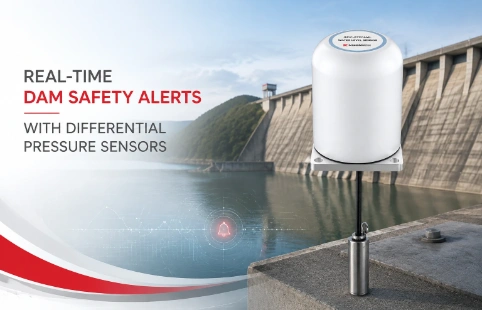
Real-Time Dam Safety Alerts with Differential Pressure Water Level Sensors
Key Takeaways An alert chain needs more than a sensor: define field in...

Wireless Humidity Data Logger with Cloud Monitoring
Humidity control doesn’t stop at the lab bench—it extends to storage, transit, and archive rooms where a forgotten spike can ruin batches. A wireless humidity data logger cuts the cord and lets you keep tabs without walking the floor. Kingmach’s approach focuses on straightforward hardware that connects to your existing network, whether you’re overseeing a cold chain shipment or a museum gallery. Instead of generic gadgets, these loggers come with sensor options that match common industrial ranges, and the data lands on a browser or mobile dashboard. No proprietary lock-in, no subscription surprises. By leveraging open communication protocols, the logger slides into most MES or BMS platforms. For operations teams juggling multiple sites, the system sends alerts when humidity drifts outside setpoints, so you can act before product is compromised. Kingmach positions these loggers as a middle ground—affordable enough for wide deployment yet robust enough for regulated environments. Technical support wraps around each deployment, from configuration to network troubleshooting.
Technical Detail
Your monitoring setup probably already talks Modbus, MQTT, or plain TCP. A wireless humidity data logger that can’t join that conversation becomes another isolated island. Kingmach designs its loggers to handshake with common industrial protocols and cloud platforms, cutting integration costs. The hardware itself strips away unnecessary complexity. Sensors cover the standard 0–100% RH range, with an accuracy drift minimal enough for most pharmaceutical, food, and storage applications. Users set logging intervals as fine as one minute—useful during stability studies—or stretch them to preserve battery life during long-haul shipments. Speaking of power, the internal cell runs on widely available lithium packs, with consumption tuned by transmission duty cycle. If your site already has a Wi-Fi or LoRaWAN gateway, you can often bring the logger online without extra infrastructure. Data flows encrypted to a web interface or gets pushed via API to your existing dashboards. Alarms trigger through SMS, email, or HTTP callbacks, so cold chain breaks are caught at 3 a.m. without someone on night shift. Kingmach’s manufacturing roots in geotechnical instruments carry over into ruggedness: enclosures resist condensation and dust, and probe connectors are field-replaceable. Custom configurations are possible for unusual mounting or communication needs. For broad compatibility, the firmware supports dynamic IP, DHCP, and static assignments. The support team helps with initial setup and network mapping, then backs off until you need them again.
News
Key Takeaways An alert chain needs more than a sensor: define field in...
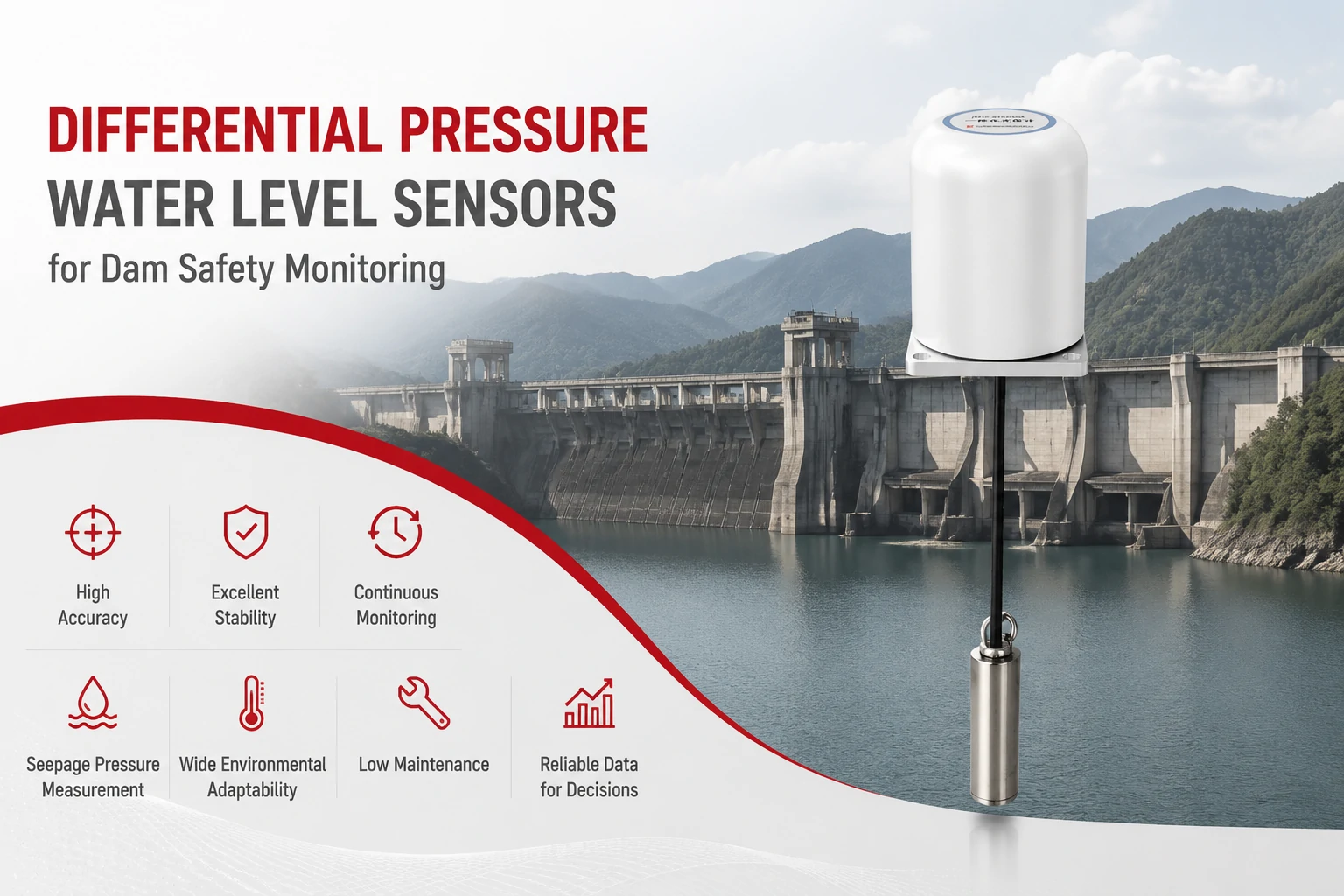
Key Takeaways The strongest fit is usually a confined, submerged, or s...
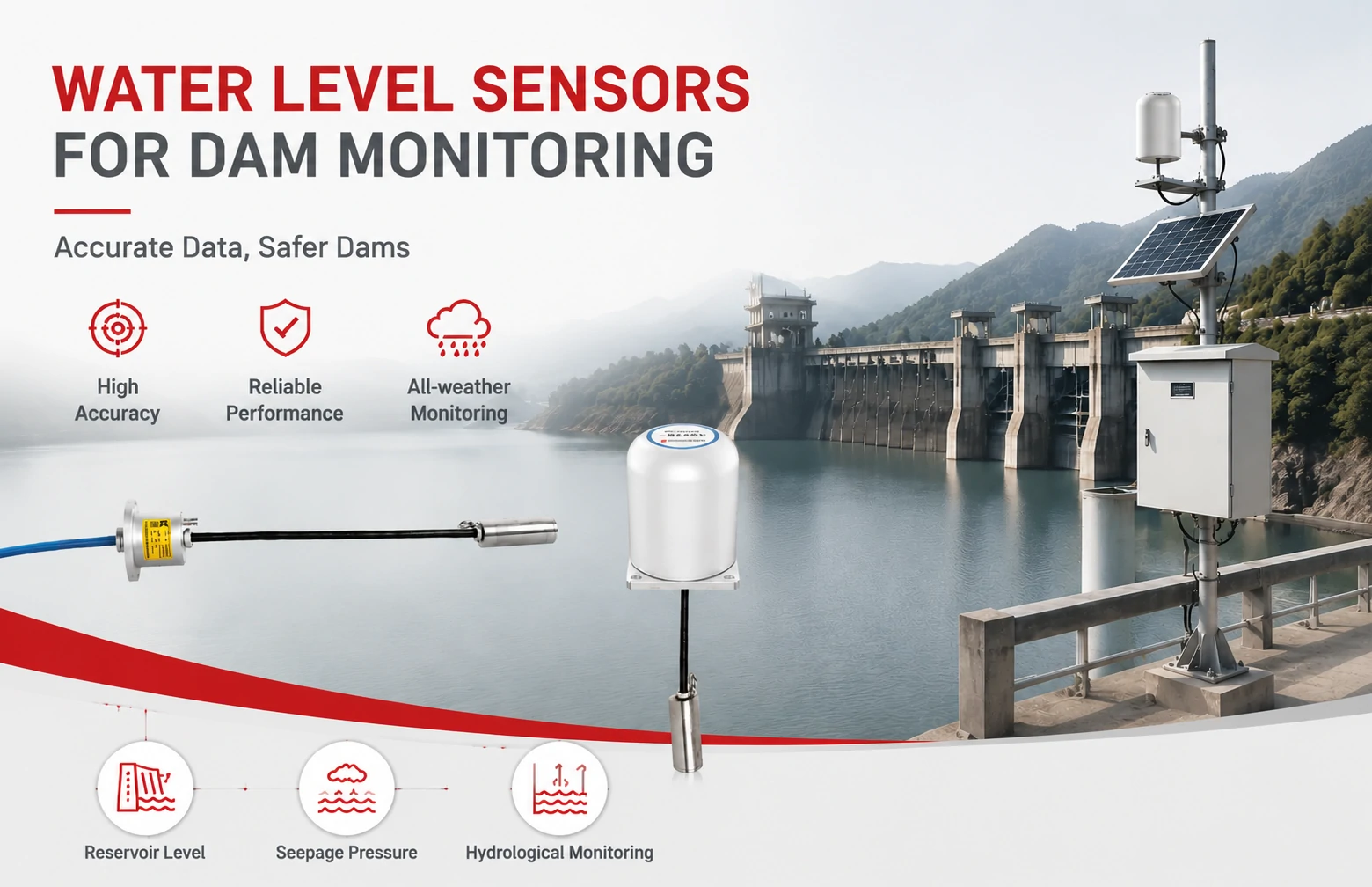
Kingmach Water Level Sensors for Dam Monitoring: A Buyer's Guide to Differential Pre...
Products
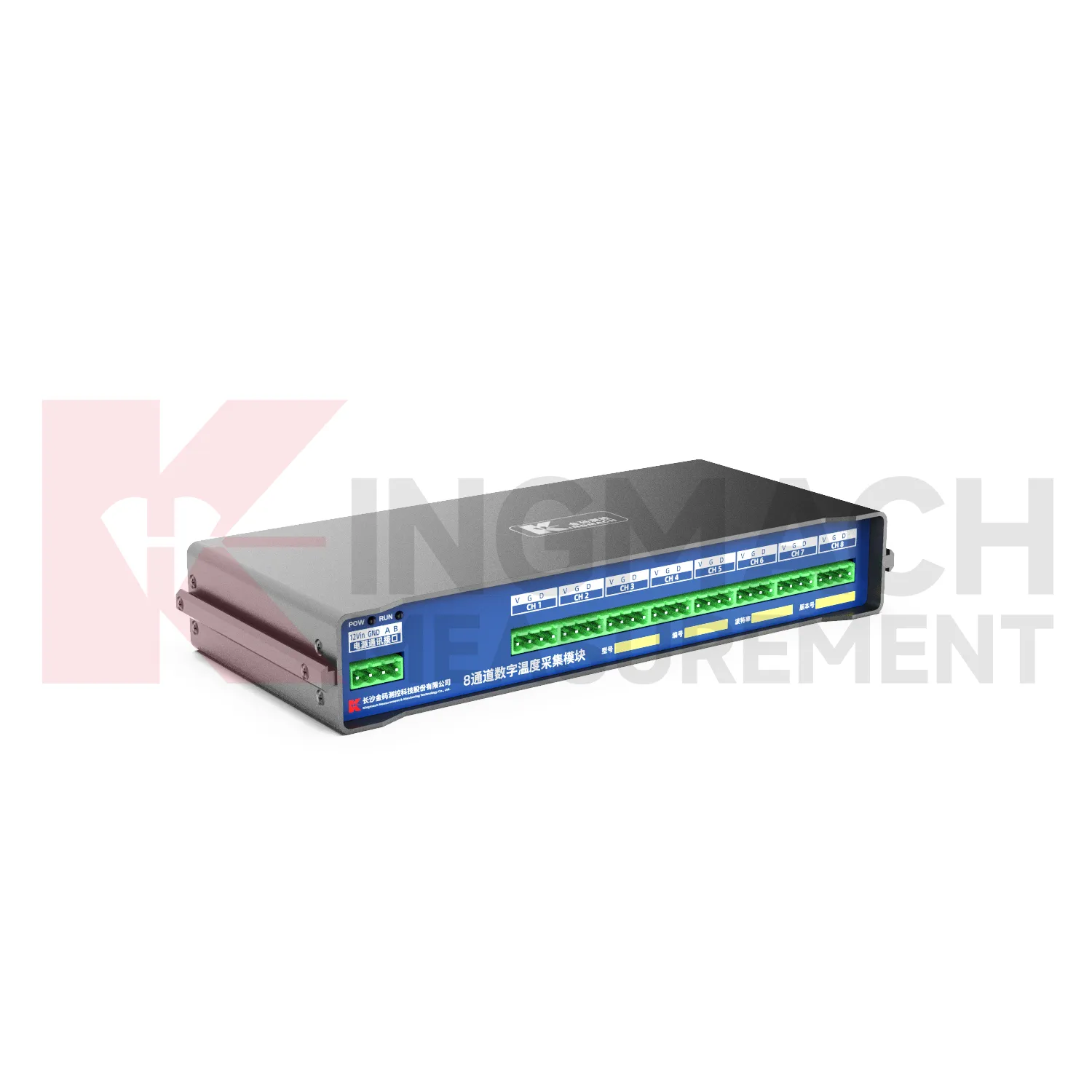
8-Channel Digital Temperature Acquisition ModuleJMWT-8DTH
View Details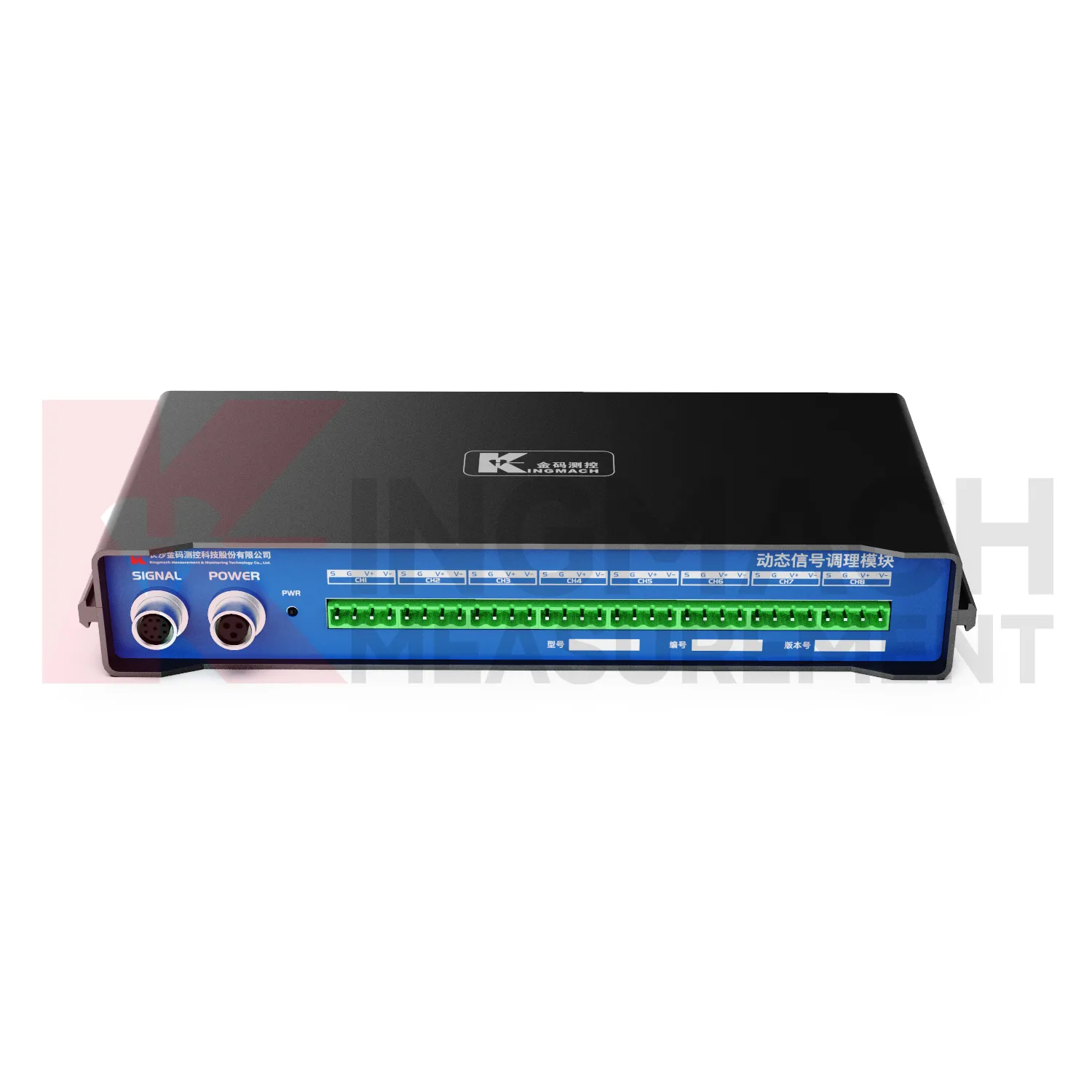
Dynamic signal conditioning moduleJMYD-2008XTA
View Details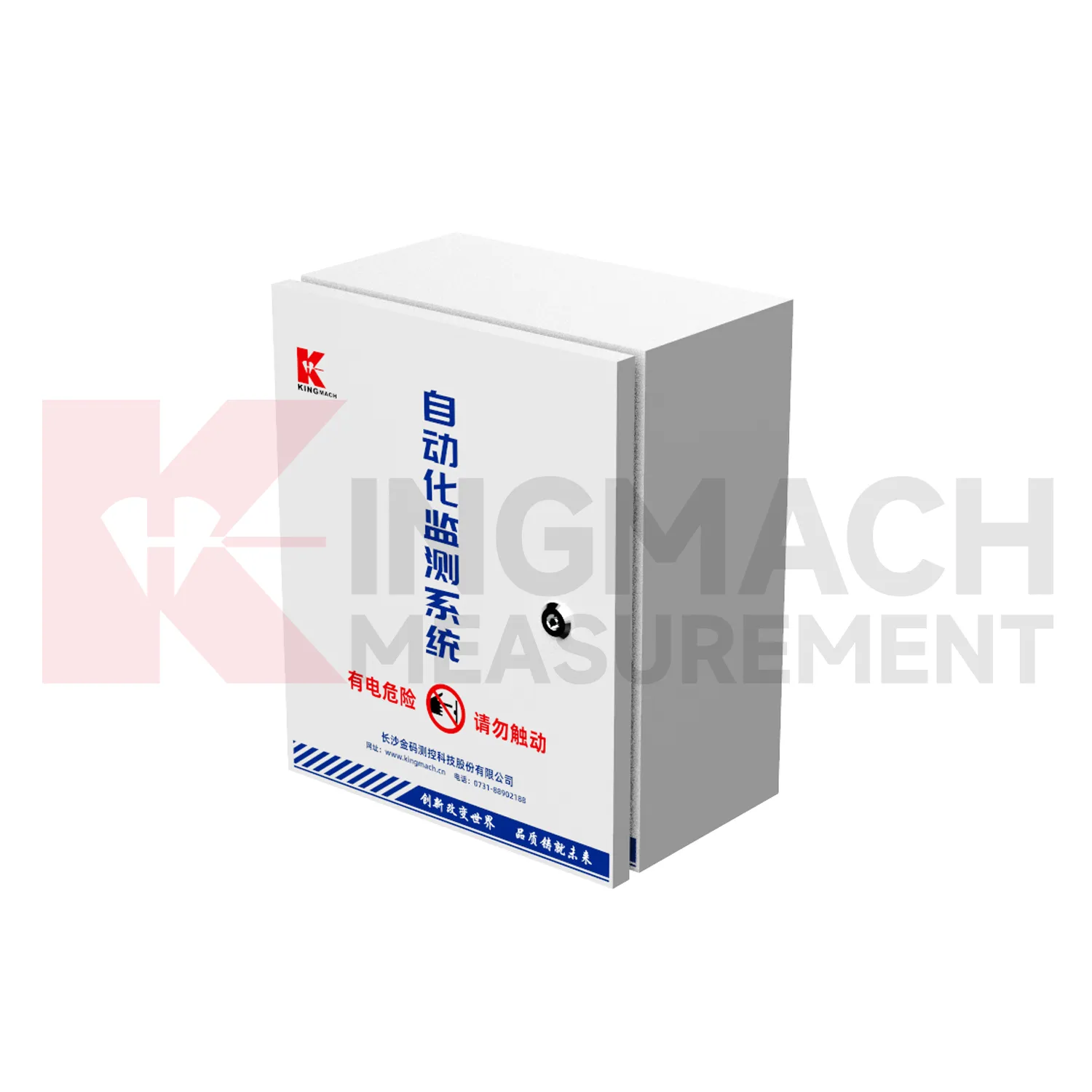
FAQ
It typically works with Wi-Fi (2.4 GHz) or sub‑GHz radios like LoRaWAN, depending on the model. We configure the hardware to match your site’s infrastructure so you don’t have to install extra gateways unless needed.
It depends on logging interval and transmission frequency. With hourly uploads, expect several months to over a year. The system also warns you when battery level drops, so you can plan replacements ahead of time.
Yes, provided your platform speaks Modbus TCP, MQTT, or accepts HTTP pushes. We usually set up the logger to drop data into a database or cloud endpoint you already use. Off-the-shelf APIs make it straightforward.
Range varies with building layout and the chosen radio. In open space, standard Wi-Fi coverage (tens of meters) is typical; LoRa versions can bridge several hundred meters. We can help select the right version based on your floor plan.
Units ship with a traceable calibration certificate. Over time, users can check against salt solutions and adjust offsets through the software. For high‑accuracy needs, we offer a return‑to‑factory calibration service on a schedule that suits your audit requirements.
Share your product type, target capacity, and application requirements. Our team can review the details and recommend a practical next step.
If you are interested in our products or want to become our partner.
Please leave your contact information, our team will contact you as soon as possible.
Mail: [email protected]
Contact Us: +8613808434127
Address: No. 188 Tongzipo West Rd, Changsha, Hunan, China